What is the primary purpose of the SQLHAVINGclause? Well organized and easy to understand Web building tutorials with lots of examples of how to use HTML, CSS, JavaScript, SQL, Python, PHP, Bootstrap, Java, XML and more.
The SQLHAVINGclause filters the results of grouped data after using the GROUP BY clause. It is used with aggregate functions such as SUM (), COUNT (), or AVG () to display only those groups that meet specific conditions.
While the WHERE clause is used to filter individual rows before they are grouped, the HAVINGclause filters the results of aggregate functions after grouping. The HAVINGclause is particularly useful when dealing with conditions related to aggregate values.
In such cases, you can use the SQLHAVINGclause to filter the aggregated result: HAVING SUM (Salaries) > 1000000. This article shows how to write the HAVINGClause to filter the data after the group applies the aggregate function.
One clause that often proves confusing is HAVING. In this comprehensive 2800+ word guide, we will unravel the mystery of HAVING through: By the end, you will thoroughly grasp this performance-enhancing SQLclause to aggregate and filter data like a pro! Here is a quick primer before we dive deeper:
This SQL tutorial explains how to use the SQL HAVING clause with syntax and examples. The SQL HAVING clause is used in combination with the GROUP BY clause to restrict the groups of returned rows to only those whose the condition is TRUE.
The HAVINGclausein SQL is often misunderstood, yet it plays a crucial role in data aggregation and filtering following the GROUP BY statement. This clause is essential for SQL queries aimed at analyzing grouped data, allowing for conditions to be added after aggregating functions, such as COUNT, SUM, AVG, MAX, and MIN.
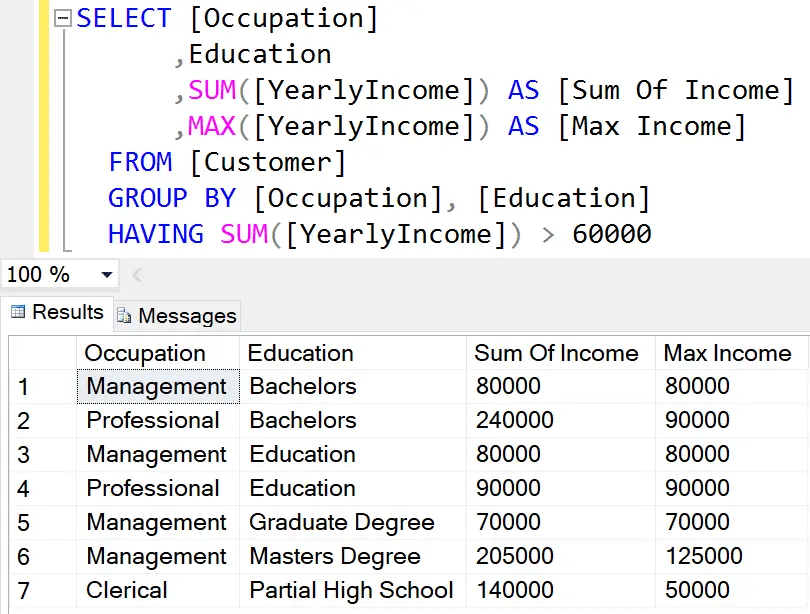 In such cases, you can use the SQL HAVING clause to filter the aggregated result: HAVING SUM (Salaries) > 1000000. This article shows how to write the HAVING Clause to filter the data after the group applies the aggregate function.